
Spatial Computing: Remember when buying a VR headset meant awkwardly clearing out your living room to slice some floating digital fruit? Yeah, those days are quickly fading into the rearview mirror. For the longest time, augmented and virtual reality have seemed like incredibly expensive party tricks. You’d strap a big piece of plastic to your face, go hard on a few gaming marathons and then hide the whole rig in a closet to collect dust.
But something fundamental has changed in the last couple years. The conversation has changed entirely. We’re no longer just talking about gaming with the arrival of sophisticated hardware like the Apple Vision Pro and the surprisingly capable Meta Quest 3. We are exiting the digital arcade and entering the era of spatial computing. And, frankly? But it’s about to change how we really get things done.
The Hardware That Made It Happen
To figure out why this is happening now you need to look under the hood. That jump from cool toy to daily driver didn’t happen by accident. Massive improvements in raw processing power, sensor technology are the direct result of. It takes some serious computational horsepower to blend digital elements seamlessly into your physical room without making you violently motion sick.
We’re talking custom silicon and high-end chip architectures that can easily compete with the guts of today’s most premium laptops. High-resolution colour passthrough cameras mean you can now see your real-world surroundings in real-time, instead of being stuck in a dark, pixelated void. You are still here. And it is that presence that makes spatial computing useful for everyday life.
| Feature | Meta Quest 3 | Apple Vision Pro |
| Target Use | Gaming & Everyday Mixed Reality | High-End Spatial Computing & Productivity |
| Starting Price | ~$500 | ~$3,500 |
| Display Tech | LCD with Pancake Lenses | Micro-OLED |
| Resolution | 2,064 x 2,208 pixels per eye | ~4K resolution per eye |
| Primary Controls | Touch Controllers & Hand Tracking | Precision Eye Tracking & Hand Gestures |
| Battery Setup | Built-in to headset | External tethered battery pack |
| Processor | Snapdragon XR2 Gen 2 | Apple M2 & R1 Chips |
Ditching the Desk: The Infinite Workspace
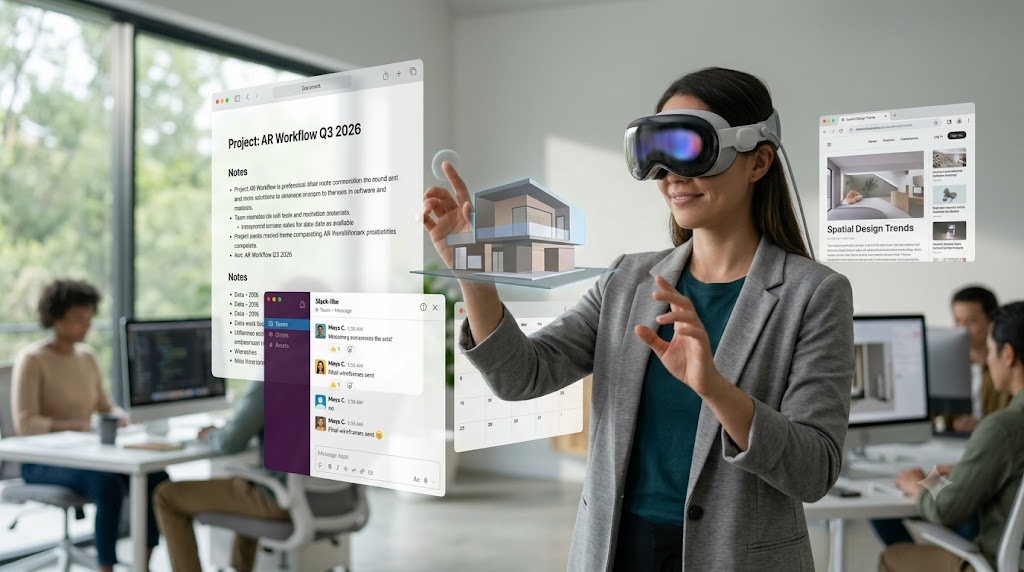
Let’s talk about the daily grind. The most immediate, mind-blowing application of this technology is to re-imagine the modern workspace. Imagine you’re working on a complex project that requires you to look at several documents, a spreadsheet and a web browser at the same time. Typically you’d be hunched over a laptop, perpetually minimising and maximising windows. Or perhaps you’ll spring for a bulky dual-monitor setup that keeps you chained to a desk.
That’s not limiting spatial computing in any way. When you put on a device like the Vision Pro, your physical environment becomes an infinite, limitless canvas. You can pin a huge virtual screen floating above your real desk, put a chat window on wall to your left and drop a music player on the coffee table.
Want to get up and get a coffee? Those digital windows stay pinned right where you left them in the physical world. Sounds like science fiction but works in practice, remarkably intuitive ‘ If you’re a heavy multitasker or have complex digital workflows, the ability to carry a massive, multi-screen office in a rucksack is nothing short of a game-changer.
Beyond the Office: Training and Everyday Utility
High-Stakes Learning
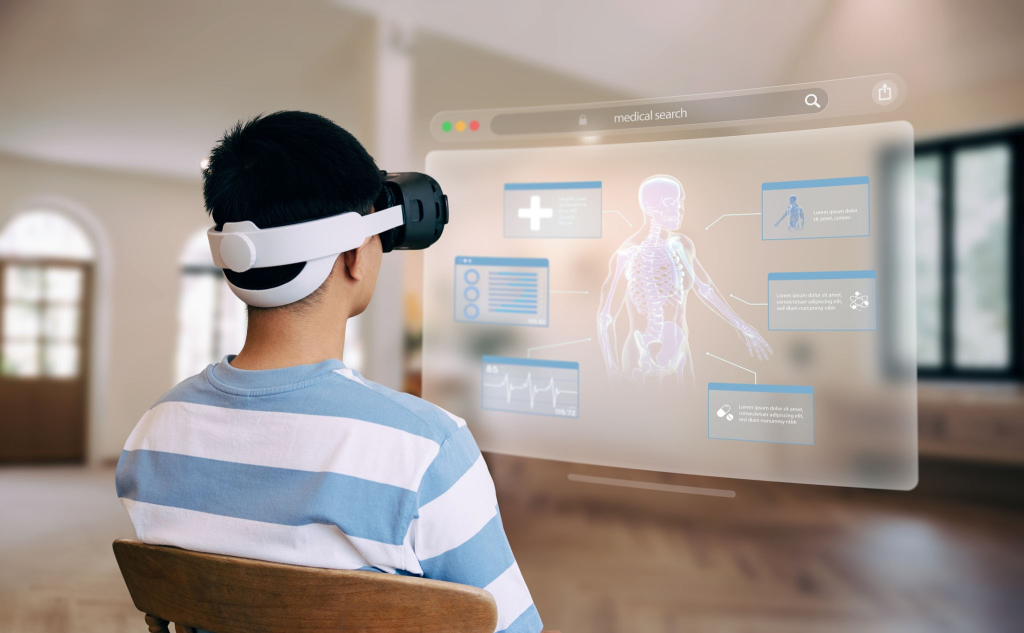
But it’s not just about making spreadsheets more fun. Spatial computing is quietly changing how we learn and train. Think about industries where hands-on experience is required but mistakes are extremely expensive. Augmented reality is already being used by medical students to explore detailed, interactive 3D models of the human anatomy, allowing them to simulate complex surgeries before they touch a real patient.
Engineering teams can view the inner workings of a jet engine in the middle of a conference room, walking around the hologram to spot design flaws. On a more relatable level, imagine trying to fix a leaky pipe under your sink. Instead of precariously balancing your phone near a puddle of water and trying to watch a YouTube tutorial, an AR application could overlay the step-by-step instructions right on the pipes in your real line of sight, telling you exactly which wrench to grab and which valve to turn.
Real-World Lifestyle Hacks
And then there’s the evolution of everyday utility and the way we consume media. We are heading toward a future where the apps we use will break free from the rectangular prison of our phones. Imagine you are preparing a new and complicated recipe. No longer do you have to wash your hands every time you want to scroll down a web page, the recipe hovers over your kitchen island with multiple timers hovering next to the corresponding pots on the stove.
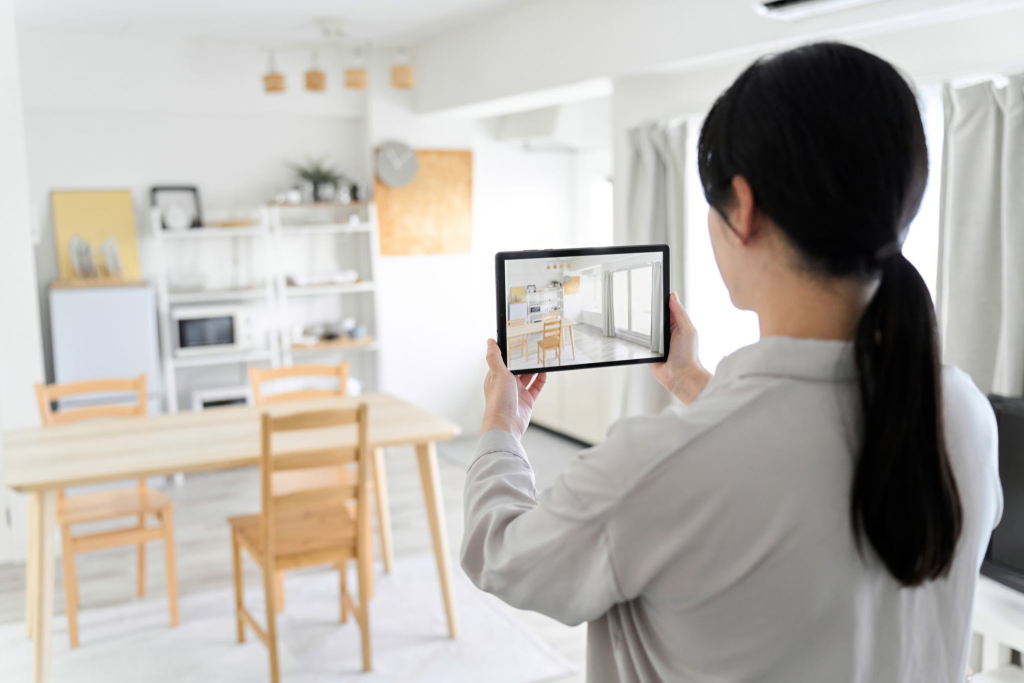
Shopping is also getting a makeover. Want to see if that new couch will actually fit in your flat or if the colour clashes with your rug? Spatial computing allows you to place a hyper-realistic, true-to-scale 3D model of the furniture into your living room before you even press the checkout button.
The Road Ahead: Hurdles We Still Need to Clear
Of course, let’s be completely honest for a second. The industry is not yet crossing the finish line. “We still have some big hurdles to overcome before everyone is walking down the street wearing these things.” The hardware today is very sophisticated, but still heavy. Operating dozens of spatial tracking sensors and powering dual micro OLED displays consumes a lot of power.
Now, we’re mostly chained to external battery packs, or down to two hours of unplugged use. The tech world is practically holding its breath for the next big leap in energy storage like the commercialization of high-density silicon-carbon batteries to finally allow these headsets to become as light and untethered as a pair of reading glasses.
Conclusion: The Ultimate Inflection Point
And then there’s the price. For the average consumer, it’s a tough pill to swallow spending a few thousand dollars on a first-generation device. But if you look at the trajectory of any major tech shift, this is exactly how it always begins. The first smartphones were big and ludicrously expensive, intended only for early adopters and enterprise users. As time goes by the technology scales, the components get cheaper and the form factor shrinks.
We are now standing at that very same inflection point. Spatial computing is no longer a gimmick looking for a reason. The hardware has finally caught up with the ambition. Whether that’s changing how we work together across the globe, changing how we interact with our digital tools, or simply providing us a huge virtual theatre in the seat of an aeroplane – the groundwork has been laid. So don’t just dismiss that headset as another gaming system. You could be looking at the future of your desktop.
