
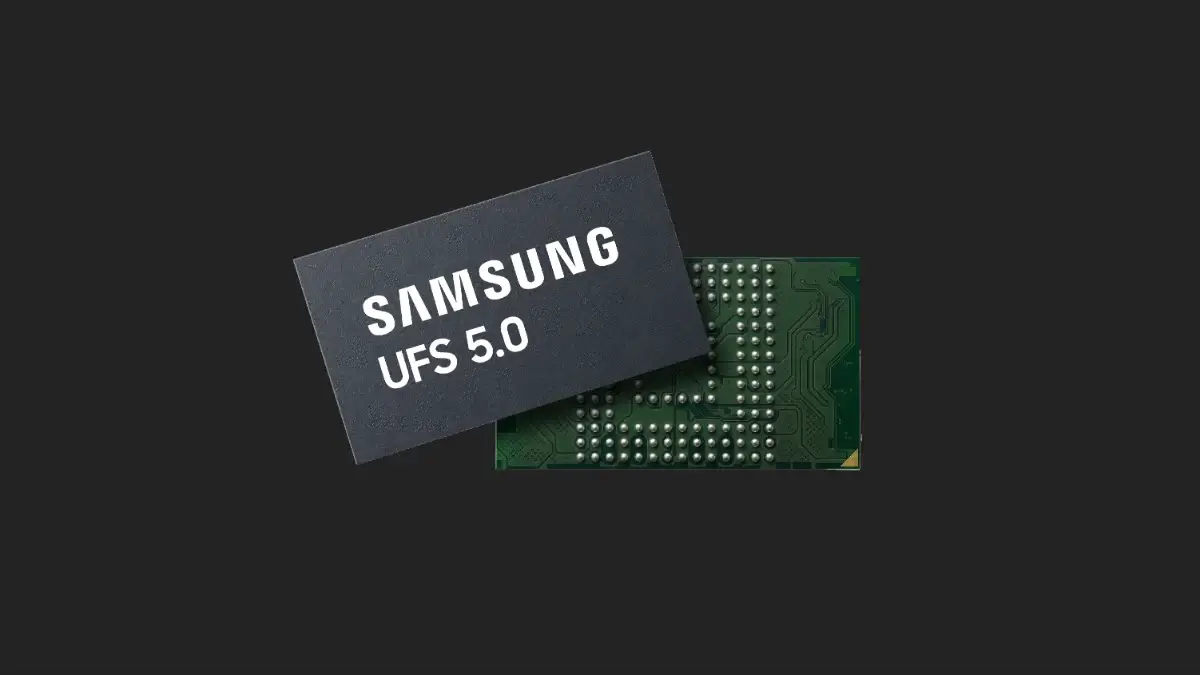
Samsung has announced the generation of mobile storage, which is called UFS 5.0. This new Samsung UFS 5.0 is going to make smartphones work a lot faster. It will bring the performance of smartphones closer to the speed of computer storage called SSD. This means that UFS 5.0 will make smartphones work fast almost as fast as computers, with SSD storage.
This shift isn’t just about a bigger number on a spec sheet–it changes how phones load apps, capture high-resolution media, run on-device AI and manage battery life.
What is UFS 5.0 and why it matter?
UFS (Universal Flash Storage) is the standard that defines how internal flash storage in phones communicates with the system and how fast data moves. The 5.0 revision dramatically increases sequential and random transfer bandwidth, bringing near‑PC levels of throughput to mobile devices. For users, that means faster app launches, near-instant file transfers, and smoother handling of large files like game assets and 8K video clips.
The Future of Human and Machine Interaction
Samsung UFO 5.0 shows what future technologies may look like—i.e, instead of just responding to commands, they’ll actually understand how people think and act.
The future isn’t just about larger screens and greater speeds; it will also be about creating genuine relationships between humans and machines.
Technical advances that power those benefits
UFS 5.0 introduces higher raw bandwidth per lane and improved PHY and link-layer technologies that boost stability at top speeds. It also brings design changes for power and signal integrity — such as dedicated power rails and stronger link equalization — so peak performance is more consistent in real-world conditions. Built-in integrity checks (inline hashing) can improve data reliability without large performance hits. These engineering upgrades are the reason UFS 5.0’s theoretical gains translate into perceptible user experience improvements.
READ MORE: Artificial Intelligence is Radically Rewiring Your Phone in 2026
Impact on battery life and thermals
Higher speed storage can seem like it would drain batteries, but UFS 5.0 also focuses on efficiency. Because tasks finish faster, components can return to low-power states sooner, and architectural changes reduce electrical noise and energy loss. In practice this means some workflows (large file transfers, heavy camera use, AI model loads) should be both faster and net more power-efficient than before. Thermal management still matters: sustained workloads will generate heat, so device cooling and firmware tuning remain important for peak sustained performance.
Final Thoughts
The Samsung UFO 5.0 isn’t real yet, but it’s a good glimpse of what’s coming. Think about all the ways artificial intelligence, smart devices, and fresh product designs are changing how we use tech. It’s getting easier to interact with gadgets in ways that just feel more natural and tailored to what we actually want.
ALSO READ: iOS 27: Apple’s Biggest Step Into the AI Era, The future of Apple OS
